
eHarmony vs Match 2026 our comparison examines matching, features, pricing, usability and relationship quality to reveal which dating site wins.
This comparison was produced by examining the current registration process, free-access and premium experience, profile creation, matching approach, search tools, mobile-app information, subscription presentation and safety guidance available from eHarmony and Match. Our assessment of premium membership was also informed by feedback from people with first-hand experience of using the paid services.
We also considered which platform is likely to suit different users, including people seeking long-term relationships, singles who prefer independent profile searches and those returning to online dating after a lengthy absence.
Features, prices and promotional offers were checked at the time of review but may vary according to location, device and subscription offer. Readers should confirm the total payment, renewal conditions and cancellation terms before subscribing.
Match gives members greater freedom to browse profiles and decide whom to contact. eHarmony takes a more guided approach, using its Compatibility Quiz and matching system to recommend people who may share important values, personality traits and relationship goals.
Our verdict: eHarmony is the better choice for most people seeking a serious, lasting relationship. Match remains a strong alternative for singles who prefer to conduct their own searches, want a broader range of profiles or live somewhere with fewer potential matches.
| Comparison | eHarmony | Match |
|---|---|---|
| Best suited to | Serious relationships and long-term compatibility | Singles who want choice and control over searching |
| Matching approach | Guided compatibility-based recommendations | Browsing, filters and suggested profiles |
| Sign-up process | More detailed Compatibility Quiz | Generally quicker and more conventional |
| Free membership | Available, but communication and other features are limited | Available, with limitations on premium features |
| Main advantage | A more focused relationship journey | Greater freedom to explore profiles |
| Potential drawback | Longer commitments and less browsing freedom may not suit everyone | More searching can mean more time and decision fatigue |
| Our winner | Winner for serious relationships | Winner for browsing flexibility |
We favour eHarmony compared to Match because its entire process is built around helping users identify potentially compatible partners rather than simply presenting a large collection of profiles.
The Compatibility Quiz asks about your personality, communication preferences, values and relationship priorities. Your answers contribute to the matching recommendations and compatibility information shown on the platform.
No questionnaire or algorithm can guarantee attraction, chemistry or a successful relationship. However, the process encourages members to think carefully about what they want and gives conversations a more meaningful starting point.
That makes eHarmony particularly attractive to people who:
Its deliberate sign-up process may also discourage some people who are only casually testing several apps. That does not mean every member will be compatible or serious, but the platform’s overall design is clearly relationship-focused.
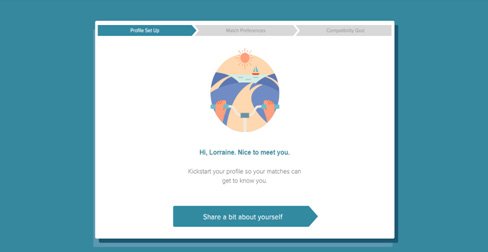
New members begin by answering the eHarmony Compatibility Quiz and completing their profile. The platform then uses those answers to suggest potentially compatible singles and provide a compatibility score.
The questions require more thought than a basic dating-app registration. It is therefore worth completing the quiz when you have sufficient time and can answer honestly rather than rushing through it.
eHarmony’s guided approach reduces the need to browse endlessly. Instead of deciding almost entirely from photographs and a few sentences, members can consider shared values, communication styles and other compatibility indicators.
This structure will not appeal to everyone. Some users prefer complete control over their searches, and people in sparsely populated areas may want to examine every available local profile. Nevertheless, for singles who want help narrowing the field, eHarmony offers the stronger overall system.
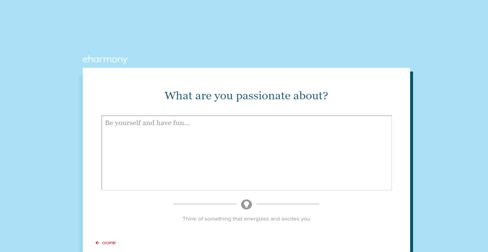
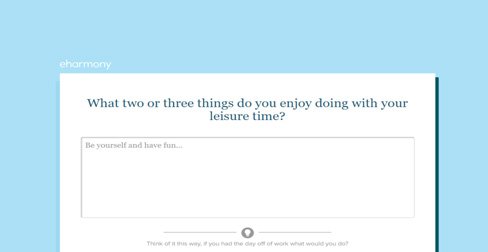
Interface images are illustrative and may differ from the current website or app as features and designs change over time. Image source: eHarmony.
Match is the stronger option for people who dislike having their choices narrowed by a compatibility system. Members can explore profiles and use available preferences and filters to find singles who meet their chosen criteria.
This creates a more independent dating experience. You can consider people outside the recommendations generated for you and adjust what you are looking for as your priorities change.
Match may be preferable to eharmony if you:
The trade-off is that greater choice can require more work. Reviewing numerous profiles, adjusting filters and deciding whom to contact can become time-consuming. People already experiencing dating-app fatigue may find eHarmony’s more selective approach easier to manage.
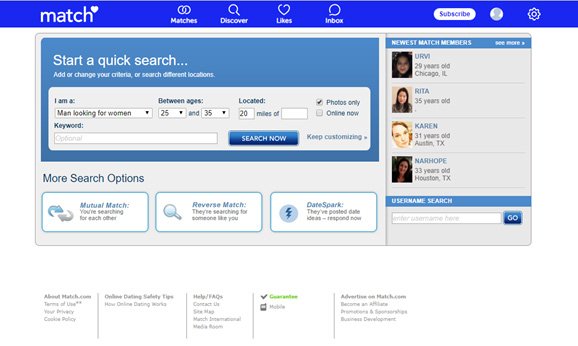
Interface image is illustrative and may differ from the current website or app. Image source: Match.
| eHarmony | Match | |
|---|---|---|
| Strengths |
Compatibility Quiz and guided matching Strong focus on lasting relationships Detailed profiles and compatibility information Reduces excessive profile browsing Available through desktop and mobile apps |
Greater browsing freedom Useful profile preferences and filters Broad appeal across different age groups More control over choosing prospective dates Available through desktop and mobile apps |
| Weaknesses |
Longer sign-up process Premium plans can require a substantial commitment Less suitable for people who want unrestricted browsing Free membership has important limitations |
Browsing can become time-consuming More profiles do not automatically mean better compatibility Premium features and optional extras can increase the cost The less-guided experience may contribute to dating fatigue |
Match has the quicker sign-up process, but eHarmony has the more purposeful one.
Match follows a relatively familiar dating-site format: create an account, add photographs, provide personal details and describe the person you hope to meet. This is convenient for users who want to start looking quickly.
eHarmony requires more initial effort because of its Compatibility Quiz. However, the additional time is not necessarily a disadvantage. Your responses supply information that the system uses when assessing possible matches, and they can help you clarify your own priorities.
Our winner for speed: Match.
Our winner for relationship-focused onboarding: eHarmony.
Both platforms offer websites and mobile apps, and both are accessible to people without advanced technical knowledge.
eHarmony provides a more guided journey. Its recommendations and compatibility information reduce the number of decisions users must make, which can make the platform feel calmer and more manageable.
Match provides more exploration and control. That is an advantage for confident searchers, although its broader selection of profiles and options may initially feel busier.
For someone returning to dating after a long relationship or divorce, eHarmony’s structured approach may be reassuring. For someone experienced with dating apps who enjoys refining searches, Match may feel more natural.
Both platforms allow people to create an account without immediately purchasing a premium subscription. However, the free experience is limited, particularly when it comes to unrestricted communication and access to premium functions.
Exact prices should be checked directly before subscribing. Dating platforms regularly vary their plans, promotional discounts and subscription lengths according to location, device and current offer.
| Pricing consideration | eHarmony | Match |
|---|---|---|
| Free account | Available with restricted functionality | Available with restricted functionality |
| Premium approach | Generally designed around longer relationship-search periods | Subscription choices and optional paid features may vary |
| Before paying | Review the total payable amount, renewal terms and cancellation procedure | Review the total payable amount, renewal terms and any optional extras |
Do not judge a subscription solely by its advertised monthly equivalent. A low monthly figure may require payment for several months in advance. Check the total charge, automatic-renewal conditions and cancellation terms before confirming payment.
This is where eHarmony earns our overall recommendation.
Match gives users more potential choice, but the largest selection is not necessarily the most useful selection. Someone seeking a long-term partner may benefit more from a smaller number of plausible matches than from repeatedly browsing profiles with limited compatibility information.
eHarmony’s system considers the information supplied through its Compatibility Quiz and profile. This does not mean every recommendation will be suitable, and users must still exercise their own judgement. Nevertheless, its structure is better aligned with the needs of people who value relationship compatibility over the volume of profiles available.
Match can still produce excellent results, particularly for proactive users who know which characteristics matter to them. It simply places more responsibility on the member to search, assess profiles and initiate suitable conversations.
Both platforms provide safety information and ways to report or block suspicious users. No dating service, however, can guarantee that every profile is genuine or that every member has honest intentions.
Whichever platform you select:
Choose eHarmony v Match if you are:
Choose Match if you are:
eHarmony wins our 2026 comparison for singles seeking serious relationships. Its Compatibility Quiz, detailed profiles and guided matching process provide a clearer route towards meeting someone with compatible values and long-term intentions.
Match remains a credible and established alternative. It is better for people who enjoy searching, want more direct control and prefer to explore a broader selection of profiles.
The choice can therefore be reduced to one simple question: would you rather receive compatibility-led recommendations or search more freely yourself?
If your priority is a lasting relationship and you are prepared to engage properly with the process, we recommend starting with eHarmony. If freedom, browsing and personal control matter more, Match is likely to suit you better.
Prices, features and promotional offers can change. Check the relevant dating platform’s current terms and total subscription charge before purchasing.
Battle of the Giants – read our guidance on the stengths and weaknesses of the big four.


